

Rossana Gemeli Roncato Carloto
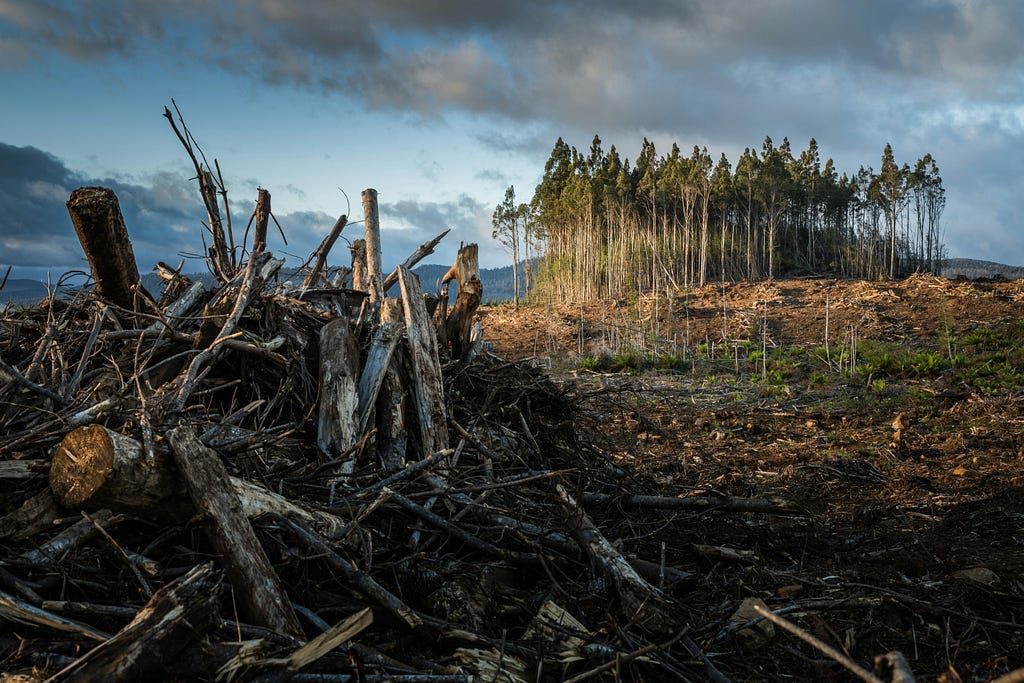
Abstract: Environmental destruction in war is not merely a legal violation, it also undermines military logistics, erodes civilian legitimacy, and fuels future violence. Drawing on Gaza, Ukraine, and northeastern Nigeria, this article examines the existing legal framework, its limits, and concrete measures to integrate environmental protection into military and peacebuilding practice.
1. The Environment as the Invisible Victim of War
In September 2025, the second assessment of the United Nations Environment Programme (UNEP) on Gaza indicated that, as of May 2025, approximately 97 percent of the territory’s orchards had been damaged or destroyed, no wastewater treatment plant remained operational, and accumulated rubble had reached close to 61 million tonnes (UNEP 2025). The conflict in Gaza is therefore one of the clearest contemporary examples of environmental devastation in war. In Ukraine, strikes on industrial and petrochemical infrastructure have released contaminants into soil, water, and air, with consequences likely to last for decades (UNEP 2022; CEOBS 2023, 2025). In northeastern Nigeria, the interaction between armed conflict, environmental degradation, and institutional fragility has deepened an already acute humanitarian crisis (Akpoghome et al. 2022, 23).
These cases are not exceptional. They reflect a broader pattern in which the environment becomes simultaneously a target, a weapon, and an often invisible victim of war. Although international law already provides relevant tools for environmental protection in conflict, a significant gap persists between legal commitments and operational realities.
2. What the Law Already Offers, and Where It Falls Short
The legal framework for environmental protection in armed conflict is not absent. Additional Protocol I to the Geneva Conventions prohibits methods and means of warfare expected to cause widespread, long-term, and severe damage to the natural environment (Protocol I 1977, arts. 35(3), 55). The Rome Statute criminalises such damage as a war crime when it is clearly excessive in relation to the concrete and direct overall military advantage anticipated (Rome Statute 1998, art. 8(2)(b)(iv)). The Convention on the Prohibition of Military or Any Other Hostile Use of Environmental Modification Techniques (ENMOD) prohibits hostile environmental modification techniques, while more recent instruments such as the International Committee of the Red Cross (ICRC)’s Guidelines on the Protection of the Natural Environment in Armed Conflict, the Geneva Water Hub’s principles on water infrastructure, and the International Law Commission (ILC)’s Principles on the Protection of the Environment in Relation to Armed Conflicts (PERAC) have clarified operational standards and legal expectations (ENMOD 1976; ICRC 2020; Geneva Water Hub 2021; UNEP and Environmental Law Institute 2009b).
The problem is not the absence of norms, but the difficulty of applying them in practice. Additional Protocol I’s triple threshold requires damage to be simultaneously widespread, long-term, and severe, raising the evidentiary bar to a point that often frustrates accountability. It is worth noting that this threshold is not merely difficult to prove: it may represent a standard of destruction that is ecologically nonsensical. An ecosystem can be devastated for decades without the damage meeting all three criteria simultaneously — which is precisely why the United Nations Compensation Commission, in its post–Gulf War process, did not invoke this standard but instead relied on direct environmental damage as the operative test. Many contemporary conflicts are also non-international, while Additional Protocol II offers much more limited environmental protection. In dualist systems, the absence of domestic incorporation further weakens the practical force of international norms.
3. Infrastructure, Structural Violence, and Recruitment
A central dimension of environmental destruction often escapes strictly legal analysis: the destruction of water, sanitation, energy, and agricultural infrastructure rarely ends conflict. In many cases, it prolongs violence and helps prepare the conditions for future instability.
Galtung’s distinction between direct violence and structural violence remains useful here. Direct violence is exercised by identifiable actors, while structural violence emerges from systems that prevent people from meeting basic needs (Galtung 1996, 2, 6). When armed operations destroy essential infrastructure, direct violence is converted into persistent structural violence. Without potable water, sanitation, arable land, or electricity, populations face displacement, poverty, disease, and collapsing livelihoods.
More than merely causing a humanitarian crisis, the destruction of water and agricultural infrastructure dismantles the civilian economy, stripping populations of livelihoods and making the relative economic incentives offered by armed groups more attractive. This converts a crisis of subsistence into a driver of conflict continuation. Beyond the economic and recruitment dimensions, recent research on civilian infrastructure protection documents how repeated damage to energy, water, and health systems produces multi-layered, long-lasting harm that goes far beyond immediate casualties, underscoring the need for concrete measures to operationalise existing IHL obligations in military planning and targeting (Morais Figueiredo 2026). Empirical evidence from the Battle of Mosul shows that the use of indiscriminate force and the destruction of civilian areas made civilians see the Iraqi forces as much less legitimate, and that this loss of legitimacy persisted after the fighting ended, feeding long-term resentment and potential future instability (Krick et al. 2025).
The case of northeastern Nigeria illustrates this dynamic clearly. Boko Haram’s expansion is a multicausal phenomenon, but the interaction between environmental decline, the retreat of Lake Chad, and institutional weakness created conditions that increased vulnerability among already marginalised populations (Akpoghome et al. 2022, 23). Environmental destruction is therefore not merely a by-product of violence. It may function as a driver of its continuation.
This logic is also supported by classical strategic thought. Clausewitz described war as a “paradoxical trinity” shaped by popular passions, military chance, and political purpose (Clausewitz 2007, 30), and defined the centre of gravity as the hub of power on which everything depends (242). When a military actor destroys the infrastructure necessary for civilian survival, it attacks not only material assets but also the social fabric on which post-conflict stability depends. In strategic terms, it risks converting a finite campaign into a self-perpetuating cycle of hostility.
The logistical dimension is equally important. Van Creveld argued that war is conditioned, before any tactical brilliance, by supply, transport, and administration (Van Creveld 1986, 1). Pagonis and Krause framed logistics as the element that underwrites the concept of operations and the scheme of maneuver and is the fulcrum upon which leverage can be created, warning that neglecting logistics means defeat (Pagonis and Krause 1992, 4, 14). Preserving critical infrastructure is therefore not only compatible with law; it is also a rational strategic choice. Assessments by the Conflict and Environment Observatory show that destruction of energy and water infrastructure in Ukraine generates cascading environmental and operational costs, increasing pressure on supply systems and complicating long-term stabilisation (CEOBS 2023; CEOBS 2025).
4. NATO, the European Union, and Green Defence
The gap between law and practice remains real, but institutional progress is visible. The North Atlantic Treaty Organization (NATO)’s Climate Change and Security Action Plan and later best-practice documents reflect growing recognition that environmental resilience, energy security, and military readiness are increasingly interconnected (NATO 2021, 2023). The war in Ukraine underscored the strategic vulnerability of long fossil-fuel supply chains and highlighted the military relevance of energy interoperability, infrastructure resilience, and adaptive logistics (Atlantic Council 2025; U.S. Department of Defense 2023).
In parallel, the European Union has adopted its own Climate Change and Defence Roadmap, developed by the European External Action Service (EEAS) in cooperation with the European Commission and the European Defence Agency (EDA) (EEAS 2022). The roadmap identifies three interlinked areas of action: improving the assessment of climate-related security risks, reducing the environmental footprint of defence activities, and integrating climate and environmental considerations into the planning and conduct of Common Security and Defence Policy (CSDP) missions and operations (EEAS 2022). It also foresees practical measures such as environmental advisers in missions, tools to measure the environmental footprint of operations, and support for more energy-efficient capabilities.
Taken together, these NATO and European Union initiatives reflect a broader shift often described as Green Defence: the idea that sustainability is not external to defence policy, but can reinforce operational efficiency, resilience, and strategic foresight. Environmental protection during armed conflict should therefore not be seen as an abstract humanitarian add-on. Recent comparative research on NATO militaries’ climate–security policies confirms that these strategies have multiplied rapidly but also highlights persistent gaps between ambitious rhetoric, uneven mitigation efforts, and the practical difficulties of implementation (Vogler 2026). The distance between strategic plans, field manuals, training routines, and real conduct during armed operations therefore remains substantial.
5. An Operational Implementation Agenda
Four practical areas remain essential. First, ecological safeguards must be integrated more explicitly into military manuals, targeting procedures, and rules of engagement. Existing doctrinal approaches remain uneven, and some military manuals still protect the environment only indirectly insofar as parts of it qualify as civilian objects (Biggerstaff and Schmitt 2023). The ICRC Guidelines (ICRC 2020) and the PERAC principles provide a stronger normative foundation from which further doctrinal development can be built.
Second, conflicts require stronger forensic protocols for environmental baselines, continuous monitoring, and causal attribution. The experience of the United Nations Compensation Commission (UNCC) after the 1991 Gulf War demonstrated that environmental damage can be documented and quantified with technical rigour: the Commission processed approximately 2.7 million claims and awarded USD 5.26 billion in environmental damages — the largest award in the history of international environmental law — establishing for the first time that environmental harm constitutes compensable loss under international law. While the UNCC’s enforcement mechanism was a product of unique geopolitical circumstances unlikely to be replicated, its forensic methodology remains a landmark model for quantifying environmental damage in any conflict. That model needs to be systematised for future contexts.
Third, accountability and reparation pathways must be clearer. Compensation funds, environmental trust mechanisms, restoration obligations, and insurance-based approaches should be developed more systematically. Current discussions on the codification of ecocide in the Rome Statute also deserve close attention, particularly as they seek to overcome the near-insurmountable intent requirements that have frustrated accountability under existing Article 8(2)(b)(iv) war crimes provisions, focusing instead on the foreseeability of grave harm.
Fourth, environmental peacebuilding must be treated as an operational priority rather than a postscript to reconstruction. UNEP’s post-conflict assessments in Afghanistan, Liberia, Sudan, and other conflict-affected countries have consistently shown that environmental degradation, resource scarcity, and institutional collapse are mutually reinforcing drivers of instability, and that integrating environmental recovery into peacebuilding strategies is a security imperative rather than an optional add-on (UNEP 2009a). When ecological collapse is treated as acceptable collateral damage, peace itself becomes more fragile and more expensive to sustain.
6. Conclusion
Environmental protection in armed conflict depends on alignment across three levels that still operate in a largely disconnected fashion: the legal-normative, the operational-tactical, and the political-strategic. When these levels remain misaligned, law becomes declaratory, doctrine remains underdeveloped, and politics externalises the long-term costs of wartime destruction. The result is visible in cases such as Gaza, Ukraine, and northeastern Nigeria: devastated ecosystems, displaced populations, prolonged instability, and conditions conducive to renewed violence.
For military planners, destroying critical infrastructure does not reliably shorten conflict; it can undermine logistics, deepen resentment, and create the conditions for future insurgency. For jurists and diplomats, the challenge is not only to elaborate new norms but to ensure that existing rules are incorporated into manuals, training, and accountability mechanisms. For policymakers, the cost of neglecting environmental protection during war is consistently higher than the cost of prevention, mitigation, and restoration.
References
Akpoghome, T. U., G. U. Akpoghome, and O. P. Igbogbo. 2022. “Examining the Effects of Internal Armed Conflict on the Nigerian Environment and the Response of Government.” Journal of Environmental Law & Policy 2 (1): 22–54.
Atlantic Council. 2025. Enhancing NATO’s Operational Readiness through Energy Interoperability. Washington, DC: Atlantic Council.
Biggerstaff, W. C., and M. N. Schmitt. 2023. “Protecting the Environment in Armed Conflict: Evaluating the US Perspective.” International Review of the Red Cross 105 (924): 1267–1292. https://doi.org/10.1017/S1816383123000516.
CEOBS (Conflict and Environment Observatory). 2023. The Environmental Consequences of the War against Ukraine: Preliminary 12-Month Assessment. London: CEOBS and Zoï Environment Network.
CEOBS (Conflict and Environment Observatory). 2025. Ukraine War Environmental Consequences: December 2024–January 2025 Review. London: CEOBS.
Clausewitz, Carl von. 2007. On War. Edited by Beatrice Heuser. Oxford: Oxford University Press.
ENMOD (Convention on the Prohibition of Military or Any Other Hostile Use of Environmental Modification Techniques). 1976.
EEAS (European External Action Service). 2022. The EU’s Climate Change and Defence Roadmap. Brussels: EEAS, European Commission, and European Defence Agency.
Galtung, Johan. 1996. Peace by Peaceful Means: Peace and Conflict, Development and Civilization. London: Sage Publications.
Geneva Water Hub. 2021. List of Principles on the Protection of Water Infrastructure. Geneva: University of Geneva.
ICRC (International Committee of the Red Cross). 2020. Guidelines on the Protection of the Natural Environment in Armed Conflict. Geneva: ICRC.
Krick, Benjamin C., Jonathan B. Petkun, and Mara R. Revkin. 2025. “Civilian Harm and Military Legitimacy: Evidence from the Battle of Mosul.” International Organization 79 (Spring): 332–357.
Morais Figueiredo, Bárbara. 2026. “Strengthening the Protection of Civilian Infrastructure in Armed Conflict: Practical Measures to Operationalize IHL and Reduce Civilian Harm.” International Review of the Red Cross (5 march): 1–30. https://doi.org/10.1017/S1816383126101106.
NATO (North Atlantic Treaty Organization). 2021. Climate Change and Security Action Plan. Brussels: North Atlantic Treaty Organization.
NATO (North Atlantic Treaty Organization). 2023. Climate Change and Security Action Plan: Compendium of Best Practices. Brussels: North Atlantic Treaty Organization.
Pagonis, William G., and Michael D. Krause. 1992. Operational Logistics and the Gulf War. Land Warfare Papers 13. Arlington, VA: Institute of Land Warfare, Association of the United States Army.
Protocol Additional to the Geneva Conventions of 12 August 1949, and Relating to the Protection of Victims of International Armed Conflicts (Protocol I). 1977.
Rome Statute of the International Criminal Court. 1998.
U.S. Department of Defense. 2023. Operational Energy Strategy. Washington, DC: Department of Defense.
UNEP (United Nations Environment Programme). 2009a. From Conflict to Peacebuilding: The Role of Natural Resources and the Environment. Nairobi: UNEP.
UNEP (United Nations Environment Programme) and Environmental Law Institute. 2009b. Protecting the Environment During Armed Conflict: An Inventory and Analysis of International Law. Nairobi and Washington, DC: UNEP and Environmental Law Institute.
UNEP (United Nations Environment Programme). 2022. Ukraine Conflict Environmental Impacts: Rapid Review and Recommendations. Nairobi: UNEP.
UNEP (United Nations Environment Programme). 2025. Environmental Impact of the Escalation of Conflict in the Gaza Strip: Second Assessment. Nairobi: UNEP.
Van Creveld, Martin. 1986. Supplying War: Logistics from Wallenstein to Patton. Cambridge: Cambridge University Press.
Vogler, Anselm. 2026. “A Mundane Challenge of Menacing Proportions? How NATO Member Militaries Address the Climate–Security Nexus.” Environment and Security 4 (2): 151–178.
About the Author
Rossana Gemeli Roncato Carloto is a Brazilian–Italian legal scholar and specialist in International Law, Human Rights, and International Security. She holds a Master’s degree in Law from the Federal University of Mato Grosso do Sul (UFMS) and has completed postgraduate specialisations in International Relations (University of Brasília — UnB), Applied International Law and History of War, among others. She is currently enrolled in two MBAs offered in partnership with the Associação dos Diplomados da Escola Superior de Guerra (ADESG), focusing on Politics, Strategy, Defence and Public Security, and on Geopolitics and Borders: Artificial Intelligence and Cybernetics. Her research focuses on digitalized warfare, AI governance in defence and security, and environmental protection in armed conflicts, with a particular interest in how international law can be translated into concrete operational practice.
The Environment as the Invisible Victim of War: Norms, Operations, and the Persistent Gap was originally published in Mundorama on Medium, where people are continuing the conversation by highlighting and responding to this story.